KONY 2012 – Let’s Take a Breath and Think This Through

I’ve viewed the KONY 2012 video which calls for the tracking down and arresting of Joseph Kony of the Lord’s Resistance Army (LRC) for exploiting children in his war in Uganda.  I believe that Joseph Kony is a bad guy, who should be brought to justice.  However, the analysis and solution of Invisible Children made me uneasy.

Then I saw the menagerie of celebrities and politicians who have lined up behind the film: Lady GaGa, George Clooney, Bill Clinton, Sean “Puff Daddy” Combs, Harry Reid, Angeline Jolie and other notables.  And I really became uneasy.

TMS Ruge, a native Ugandan, concerned about Africa’s acting as a helpless victim depending on the heroic West writes:

In two weeks, Invisible Children will have millions of dollars; you will have a t-shirt and bracelet; and Uganda and Central Africa will be left wondering what just happened. . .  

Instead of enjoining us to work together to amplify pressure on our governing bodies to address security and development holes, IC has taken the initiative to proposition an outside agency to do it for us.

How are we ever going to awaken to our civil responsibility to demand more from our sitting governments if we are lulled into a dependency state for every civil service we should rightly expect from our governments?

Here’s an interesting video from an inside Uganda perspective:

Posted in Uncategorized | Leave a comment

Are We Raising a Generation of Helpless Kids?

by Mickey Goodman (The Huffington Post)

When a college freshman received a C- on her first test, she literally had a meltdown in class. Sobbing, she texted her mother who called back, demanding to talk to the professor immediately (he, of course, declined). Another mother accompanied her child on a job interview, then wondered why he didn’t get the job.

A major employer reported that during a job interview, a potential employee told him that she would have his job within 18 months. It didn’t even cross her mind that he had worked 20 years to achieve his goal.

Sadly, the stories are all true, says Tim Elmore, founder and president of a non-profit, Growing Leaders, and author of the “Habitudes®” series of books, teacher guides, DVD kits and survey courses. “Gen Y (and iY) kids born between 1984 and 2002 have grown up in an age of instant gratification. iPhones, iPads, instant messaging and immediate access to data is at their fingertips,” he says. “Their grades in school are often negotiated by parents rather than earned and they are praised for accomplishing little.

But why have parents shifted from teaching self-reliance to becoming hovering helicopter parents who want to protect their children at all costs?

“I think it began in the fall of 1982, when seven people died after taking extra-strength Tylenol laced with poison after it left the factory,” he says. Halloween was just around the corner, and parents began checking every item in the loot bags. Homemade brownies and cookies (usually the most coveted items) hit the garbage; unwrapped candy followed close behind.

That led to an obsession with their children’s safety in every aspect of their lives. Instead of letting them go outside to play, parents filled their kid’s spare time with organized activities, did their homework for them, resolved their conflicts at school with both friends and teachers, and handed out trophies for just showing up.

“These well-intentioned messages of ‘you’re special’ have come back to haunt us,” Elmore says. “We are consumed with protecting them instead of preparing them for the future. We haven’t let them fall, fail and fear. The problem is that if they don’t take risks early on like climbing the monkey bars and possibly falling off, they are fearful of every new endeavor at age 29.”

Teachers, coaches and executives complain that Gen Y kids have short attention spans and rely on external, instead of internal motivation.

Family psychologist John Rosemond agrees. In a February 2 article in the Atlanta Journal Constitution, he points out that new research finds that rewards often backfire, producing the opposite effect of that intended. When an aggressive child is rewarded for not being aggressive for a short period of time, he is likely to repeat the bad behavior to keep the rewards coming.

Where did we go wrong?

• We’ve told our kids to dream big – and now any small act seems insignificant. In the great scheme of things, kids can’t instantly change the world. They have to take small, first steps – which seem like no progress at all to them. Nothing short of instant fame is good enough. “It’s time we tell them that doing great things starts with accomplishing small goals,” he says.

• We’ve told our kids that they are special – for no reason, even though they didn’t display excellent character or skill, and now they demand special treatment. The problem is that kids assumed they didn’t have to do anything special in order to be special.

• We gave our kids every comfort – and now they can’t delay gratification.

• We made our kid’s happiness a central goal – and now it’s difficult for them to generate happiness — the by-product of living a meaningful life. “It’s time we tell them that our goal is to enable them to discover their gifts, passions and purposes in life so they can help others. Happiness comes as a result.”

The uncomfortable solutions:

“We need to let our kids fail at 12 – which is far better than at 42,” he says. “We need to tell them the truth (with grace) that the notion of ‘you can do anything you want’ is not necessarily true.”

Kids need to align their dreams with their gifts. Every girl with a lovely voice won’t sing at the Met; every Little League baseball star won’t play for the major leagues.

• Allow them to get into trouble and accept the consequences. It’s okay to make a “C-.” Next time, they’ll try harder to make an “A”.

• Balance autonomy with responsibility. If your son borrows the car, he also has to re-fill the tank.

• Collaborate with the teacher, but don’t do the work for your child. If he fails a test, let him take the consequences.

“We need to allow children to fail while they are young in order to succeed when they are adults.”

Read Mickey Goodman’s full article here:

http://www.huffingtonpost.com/Mickey-goodman/are-we-raising-a-generati_b_1249706.html

Posted in Uncategorized | Leave a comment

Sometimes You Just Have to Play in Pain

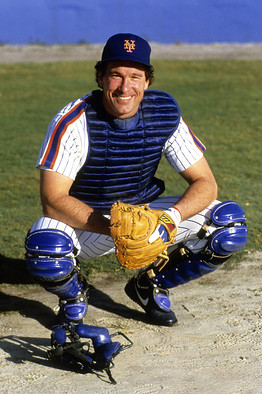
Gary Carter Showed Me How to Play the Game

I never met the baseball great, who died last week. But he spoke to me in my darkest hour.

By Andrew Klavan (Wall Street Journal)

I never met baseball Hall of Famer Gary “Kid” Carter, but his death last week from brain cancer at age 57 moved me deeply. Some 25 years ago, his life and his style of play spoke to me and inspired me in a moment of terrible need. It was an example of what celebrity can do when it’s done well.

The second half of my life has been so bright with blessings that it’s difficult for me to think back to the 1980s, when I could see no end to my emotional pain. Personal demons left me blind to the gifts that God had showered on me so generously. I began to think my beautiful wife and baby daughter would be better off without me.

I can’t really say how serious I was when I began to contemplate suicide. But I remember one night, sitting alone in my room in darkness, smoking cigarette after cigarette as I considered the ways in which I might put an end to myself.

The radio was on, playing a Mets game. I’d been trying to listen before the dark thoughts took over. By the time the ninth inning came around, I wasn’t paying attention at all.

One sentence ran through my mind again and again: “I don’t know how I can live.”

Before I knew it, the game had ended and Carter—who apparently had beaten out a grounder to reach first base—was giving a postgame interview. The interviewer asked him how he managed to outrun the throw when his knees were so bad from years of playing catcher, squatting behind home plate.

Carter was a devout Christian with just the bright, inspiring Tim Tebow sort of personality our media can’t stand. He was forever thanking Jesus Christ in postgame interviews. He once remarked that he could see the smiles curdle on the faces of unbelieving journalists when he did it, but he felt he had to tell the truth.

I was not a Christian then—not yet—and if Carter had preached religion at that moment, it would have gone right past me. But he didn’t. He said something else, something much simpler but also true. I don’t remember the words exactly but a fair translation would be this: “Sometimes you just have to play in pain.”

Carter’s words somehow broke through my self-pitying despair. “Play in pain?” I thought. “Hell, I can do that. That’s one thing I actually know how to do.”

I had been looking for answers but I didn’t know the answers. I had been looking for solutions, but solutions were for another day. It hadn’t occurred to me that maybe, for now at least, the only way to go on living was to do like the great athletes do and just tough it out.

I did tough it out, and I got therapeutic help, and I abandoned lifelong self-destructive habits and thoughts. And had I known in that moment how very close I was to genuine mental health and happiness, I would have slapped myself stupid for ever thinking to end it all.

Gary Carter didn’t save my life. He was just a ballplayer I’d never met. He didn’t have that power. But because he was how he was and played how he played and spoke with a brash, sunny optimism that made journalists hate him—well, let’s say he lit a candle when a little bit of light made all the difference. . .

So goodbye, Kid. And thanks. You did it the way it ought to be done.

Mr. Klavan is a novelist, screenwriter, and contributing editor to City Journal.

Here is the link for Klavan’s full article:

http://online.wsj.com/article/SB10001424052970204880404577229221826879122.html?mod=googlenews_wsj

Posted in Uncategorized | Leave a comment

My Dad Delivers Pizza

One Saturday evening I drove out in the middle of a Michigan January blizzard to pick up my family’s evening meal at Domino’s Pizza. While waiting at the counter, I heard behind me the parlor door swing open, and in blew the Domino’s Pizza delivery man carrying his empty pouches. Our eyes locked. He looked a bit embarrassed.

It was Justin. Justin is a thirty-something father of four. For years he’s been a successful construction entrepreneur, but apparently the recession has choked his business. So now, he’s delivering pizzas at night.

Before he could think to himself: “I’ll bet Pastor Chanski thinks I’m such a loser”, I shouted, “You’re a great man, Justin! When I was young like your kids, my dad used to work three jobs to keep clothes on our backs, food on our table, and a roof over our heads. And there’s no man I respect more in the whole world than my dad! He did whatever it took to take care of us. That’s what you’re doing for your children. You’re a great man!”

Justin’s changed face told me he wasn’t embarrassed anymore.

Times are tough, not only in Michigan, but all over the country. We financially challenged fathers can keep up our courage by considering our grand roles as imaging our Heavenly Father to our little ones.

“Your Father knows what you need, before you ask Him. ‘Pray, then, in this way: ‘Our Father who art in heaven, Hallowed be Thy name. . . Give us this day our daily bread . . .'” (Matthew 6:8-9, 11).

“Or what man is there among you, when his son shall ask him for a loaf, will give him a stone? Or if he shall ask for a fish, he will not give him a snake, will he? If you then, being evil, know how to give good gifts to your children, how much more shall your Father who is in heaven give what is good to those who ask Him” (Matthew 7:9-11).

As image bearing Fathers, we’re fundamentally to be providers – not fulfilled self actualizers, not esteemed business owners, not corporate heavy hitters, not sharp automobile drivers, not stylish clothing wearers. We’re to be providing bread winners who sweat from our brows (Genesis 3:17-19), caring for the needs of our wives and their babies.

Posted in Uncategorized | Leave a comment

Monday Morning Denard Smiles for Michigan Football Fans

Jim Knight writes:

Simply put, here’s what may be the best 2 minutes, 32 seconds of your day as the Ann Arbor band Mind’s Eyes sings Pat Stansik’s tribute to Denard Robinson, who has 3,229 rushing yards, 4,931 passing yards and a combined 75 touchdowns rushing and passing in his career at Michigan.

There are clever lyrics all the way through the song, but it’s tough to top, “You could win the Heisman, it’s your senior year; If you cut your dreads I want a souvenir.”

The lyrics to “I Love You Denard:”

Henne Brady Grbac Navarre
All of these men could throw very far
Slow white quarterbacks most were five stars
Pro-style offense run by Lloyd Carr

When he retired I was still all smiles
Herbstreit told me that we’d get Les Miles
Didn’t know what to think about the spread
Mallett left and I thought we were dead

First year under Rich Rod was a disaster
Spread offense needs a QB much faster
I suffered for two miserable years
But then you dried up all my tears

I think I’m in love I’ve never felt like this
Nothing compares not even my first kiss
My heart skips a beat every time you gain a yard
I know this might sound strange but I love you Denard

I love you Denard I don’t know how to show it
I used to be scared every time you would throw it
You’re the QB for me and I want everyone to know it

When you took your first snap vs. Western Michigan
That’s when we found you were made of dilitihium
Always my favorite even when Tate started
Now the whole campus gets Denarded

No D coordinator seems to have an answer
A Michigan Man so glad you didn’t transfer
Under the lights my heart still races
Because of you I don’t mind tripping over laces

They say you can’t play QB in the NFL
Well I think you play QB pretty darn well
You could win the Heisman, it’s your senior year
If you cut your dreads I want a souvenir

Together so long can’t stand to be apart
16 on the field number one in my heart
Without you it’s gonna be hard
I wish you never had to leave I love you Denard

http://www.annarbor.com/sports/um-football/the-best-love-song-to-michigan-quarterback-denard-robinson-youll-ever-hear/

Posted in Uncategorized | Leave a comment

Jeremy Lin: The Tim Tebow of the NBA?

Three weeks ago pro basketball player Jeremy Lin—unrecruited out of high school and undrafted out of college—was sent to the minor leagues of the NBA. Three days later he was reinstated with the Knicks as a benchwarmer. On February 4, he scored 25 points, with 5 rebounds and 7 assists. The next game he had 28 points and eight assists, and tonight he scored 38 points for a victory over the Lakers, capping off a remarkable week and a four-game winning streak. He’s becoming the Tim Tebow of the NBA.

Here are some excerpts from an interview with The Evangelical Portal:

How does your faith shape the way you behave on the court?  Are you a different basketball player because you are a Christian?

Not just in basketball, but I think in life, when you’re called to be a Christian, you’re automatically called to be different from everyone else.  In today’s world of basketball, it makes you really different, because the things that society values aren’t necessarily in line with what God values.

Much of it comes down to humility.  We as Christians are called to be humble.  And if we really understand the gospel, we will be humble.  We should be humble, and understand that everything that is good comes from God.

We are also called to turn the other cheek and love our enemies.  There are times on the basketball court when people will say things to you, and you just have to bite your tongue and love them.  It’s almost as though you have to love then even more, and that love means more if they’re wronged you.

Society focuses so much on individual stats and wins and losses.  To a certain extent, you can control those things.  But to play for God means to leave the records and the statistics up to Him and give your best effort and allow God to figure out whether you win or lose, whether you play or shoot the ball well that game.  So I just try to make sure that I work hard and in a godly way.  I prepare myself as well as I can, and at every point during the game I try to submit myself to God and let Him use me.

When you’re called to be a Christian, you’re automatically called to be different from everyone else.  In today’s world of basketball, it makes you really different, because the things that society values aren’t necessarily in line with what God values.

Much of it comes down to humility.  We as Christians are called to be humble.  And if we really understand the gospel, we will be humble.  We should be humble, and understand that everything that is good comes from God.

You can read the entire interview here:

http://www.patheos.com/Resources/Additional-Resources/Faith-and-Fate-of-Jeremy-Lin.html?print=1

Posted in Uncategorized | Leave a comment

Restrained from Sin by an Abigail

Nabal has humiliated and offended David.  So David straps on his sword and heads down the mountain to slay every male in Nabal’s house.  He’s planning a Nob-style slaughter.  Regarding David’s mindset, passion is in the room, and reason is out the door!  But quick-witted Abigail moves to intercept David before he does something he’ll later regret.  She meets him with a winsome gift and persuasive words which bring David back to his senses.  Abigail says: “The Lord has RESTRAINED you from shedding blood, and from avenging yourself by your own hand” (1 Samuel 25:26).

My wife walks our Golden Retriever, Shasta, with a RESTRAINING leash.  It holds the dog back from running out in front of 55 miles-per-hour cars and trucks, from leaping into neighborhood ponds laced with muskrat traps, and from scrapping with neighboring German Shepherds.  Her wise counsel also keeps me, her husband, out of a lot of trouble.

Our sovereign Good Shepherd enlists RESTRAINING leashes of many forms, to keep us from sinning to our spiritual hurt.

Charles Spurgeon writes:

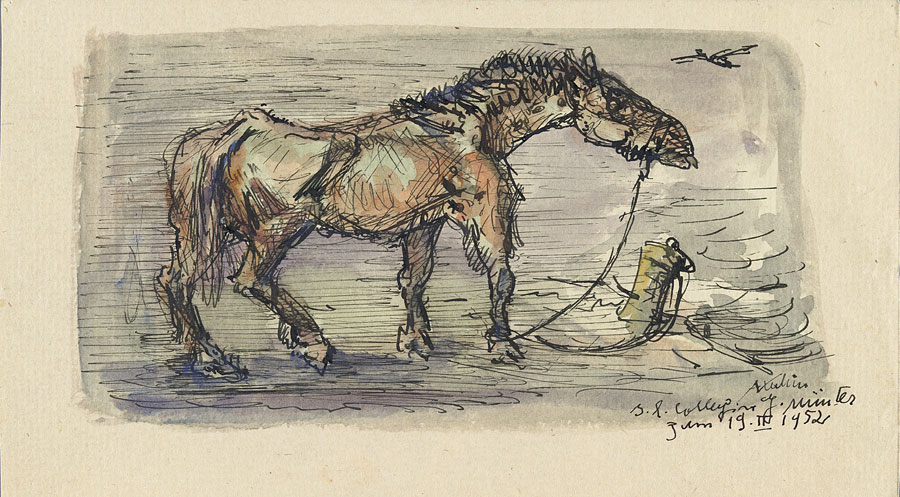
Your sicknesses, and pains, and griefs, and depression of spirits, and all sorts of trials are often sent to you just to prevent you from sinning; they tether you, RESTRAIN you, like the horse that was in a meadow with a clog on him.  (A clog is a block of wood tied to a horse’s hoof to keep it from galloping.)

A friend said to the owner, “I wonder why you clog such a fine horse as that; it seems such a pity.”

“Well,” replied the owner, “I would rather clog him than lose him; and if I did not clog him, I should lose him. He has a habit of jumping hedges and ditches, and we cannot keep him unless we clog him.”

So, my brother, you have a clog, because the Lord would rather clog you than lose you; he would sooner make you suffer here than permit you to suffer for ever in hell.

“Blessed be the Lord God of Israel” (1 Samuel 25:32), for RESTRAINING us with with wise-witted spouses, neck pinching leashes, and hoof tethering clogs.

http://www.sermonaudio.com/sermoninfo.asp?SID=129121545285

Posted in Uncategorized | Leave a comment

Seeing My own Face in the Costa Concordia Mirror

David Murray, in editorializing on the captain’s ship-sinking folly, has caught me red-handed:

I’ve steered deliberately off course too…

I’ve tried to impress old friends too…

I’ve sailed too close to the rocks too…

I’ve turned too late too…

I’ve let others suffer the consequences of my sins too…

I’ve fled from the scene too…

I’ve blamed others too…

I’ve feared to face up to my actions too…

I’ve changed my story too…

I’ve refused to take responsibility too…

I’ve lied to cover my tracks too…

Al Mohler rightly called Captain Schettino of the Costa Concordia  ”The Chicken of the Seas

But am I the chicken of Grand Rapids?

Are you the chicken of…?

Don’t despair. There’s full and free and forever salvation in Christ for chickens everywhere.

http://headhearthand.org/blog/2012/01/20/are-you-the-chicken-of/

Posted in Uncategorized | Leave a comment

Cowardice & Courage Aboard the Costa Concordia

Albert Mohler deftly critiques the near sinking of the Costa Concordia:

The sight of the giant cruise ship Costa Concordia listing in the deadly embrace of the sea is now a graphic symbol of failure. Its timing is absolutely eerie, coming so close to the 100th anniversary of the sinking of theTitanic. But, unlike the Titanic, this disaster did not take place in the middle of the ocean, far from the range of observation. The Costa Concordia appears to be almost touching the rocky Italian coastline. . .

And then came the story. It appears that Captain Francesco Schettino deliberately took the Costa Concordia off its assigned course in order to bring the giant vessel dangerously close to the Tuscan coastline so that a crew member could greet his family. During the maneuver, the ship hit a submerged outcropping of rock, tearing a massive hole in the hull. Within seconds, the Captain knew the ship was in trouble, and he brought the fast-sinking ship to rest on a reef, listing heavily on its starboard side.

Within minutes, local authorities launched a rescue operation. Thankfully, the accident took place close to shore, and the captain had been able to crash the ship onto the reef, preventing it from fully sinking. Nevertheless, massive portions of the ship’s interior space quickly filled with the cold and dark water. The death toll could rise to as many as 40 or more. As of Wednesday night, eleven deaths had been confirmed, and another 24 passengers and crew remained missing. . .

A flood of questions immediately surfaced. Why had the captain deliberately taken the ship off its course? What sane captain would bring a massive $450-million vessel with 4,200 passengers and crew into such clearly dangerous waters? Once the ship was compromised, were standard lifesaving practices followed? . . .

An Italian newspaper, Corriere della Sera, obtained and released a recording of the Italian Coast Guard communicating with Captain Schettino after the accident. . .

The recording makes clear that Captain Schettino abandoned his ship long before most passengers were rescued. Captain Gregorio De Falco of the Italian Coast Guard had discovered that Captain Schettino was not on board his ship, but in a rescue boat. Captain De Falco ordered Schettino to return to his ship and command the rescue operation: “Schettino? Listen Schettino. There are people trapped on board. Now you go with your boat under the prow on the starboard side. There is a pilot ladder. You will climb that ladder and go on board. You go on board and then you will tell me how many people there are. Is that clear? I’m recording this conversation, Cmdr. Schettino…” . . .

We are left with the tragic picture of a frightened man who abandoned his post when he was most needed, and consigned over 4,200 human beings in his care to the dark water.

It is a portrait of moral collapse and the forfeiture of manhood.

Thankfully, this was not the only picture to be seen. Manrico Giampedroni, a 57-year-old crew member aboard the Costa Concordia devoted himself fearlessly to the rescue of passengers, returning to the listing ship again and again to find them and return them to safety. He stopped only when he badly fractured his leg and had to be rescued himself. Francis Servel, who attempted to flee the boat with his wife, Nicole, discovered that there was only one life jacket. He put it on his wife, and that was her last sight of him. “I owe my life to my husband,” she said. . . .

Among the monuments on the grounds of the United States Naval Academy at Annapolis, Maryland is a massive granite marker dedicated to the memory of Commander William L. Herndon. In 1857, Commander Herndon was in command of the commercial vessel Central America, under assignment to the United States government, when it ran into hurricane force winds. Commander Herndon gave everything he had to the rescue of those in his care. He evacuated 31 women and 28 children before the ship sank into the stormy waters off Cape Hatteras, North Carolina. He gave his watch to one of the women and asked her to get it to his wife, explaining that he could not leave the ship while anyone remained on board.

Survivors told of seeing Commander Herndon go down with his ship, cigar chomped in his teeth, his head bowed in prayer — a portrait of courage, devotion to his charge, and defiance of fear. Two U. S. Navy vessels have since been commissioned in his memory.

Here we face two radically different men, who made radically different decisions. The decisions we make in the present will determine the kind of decision we would make in the future if we were to face the same challenge. Nothing less than the moral order of the universe is at stake when we consider the difference between Commander Herndon off Cape Hatteras and, off Italy, the Chicken of the Sea.

Read Dr. Mohler’s entire blog article here:

http://www.albertmohler.com/2012/01/19/the-chicken-of-the-sea-a-modern-tale-of-fear-failure-and-cowardice/

Posted in Uncategorized | Leave a comment

What’s the Dollar Market Value of a Homemaker?

by Porsche Moran (Investopedia)

The life of a homemaker is one that includes an endless amount of demands and to-dos. Depending on the size of the home and family, the position of homemaker can go well beyond the usual nine to five. We examined some of the tasks that a homemaker might do to find out how much his or her services would net as individual professional careers. We only take into consideration tasks which have monetary values and use the lowest value for each calculation.

Private Chef

Meal preparation is one of the major tasks of most homemakers. From breakfast to dinner, there is plenty of meal planning and cooking to be done. The American Personal Chef Association reports that its personal chefs make $200 to $500 a day. Grocery shopping is another chore that needs to be factored in. A homemaker must drive to the supermarket, purchase the food and deliver it to the home. Grocery delivery services charge a delivery fee of $5 to $10.

Total cost for services: $1,005 per five day work week x 52 weeks = $52,260 per year.

House Cleaner
A clean and tidy home is the foundation of an efficient household. Typical cleaning duties include vacuuming, dusting, sweeping, scrubbing sinks as well as loading the dishwasher and making beds. Professional maids or house cleaning service providers will charge by the hour, number of rooms or square footage of the home. For example, bi-weekly cleaning of a 900-square-foot, two-bedroom apartment with five rooms, costs $59-$124 . A 1,300 square-foot, single-story home with seven rooms runs $79-$150 . A 2,200 two-story, three-bedroom home with nine rooms averages $104-$180 . Additional tasks such as oven or refrigerator cleaning and dusting mini blinds can run an extra $20-$25.

Total cost for services: $118 per week X 52 Weeks = $6,136 per year.

Child Care
Homemakers provide full-time, live-in child care. This type of service from a professional provider would usually come with a host of perks including health insurance, paid vacation and sick days, federal holidays off, dental and vision coverage, and bonuses. The International Nanny Association’s 2011 survey found that nannies make $600 to $950 per week in gross wages, on average.

Total cost for services: $600 a week plus perks/benefits x 52 Weeks = $31,200 per year.

Driver
A private car service might seem like a high-end luxury to most, but the beneficiaries of a homemaker get this service on a daily basis. Companies like Red Cap, which provides personal drivers that use the client’s own car as the means of transportation, offer a glimpse into the cost of this homemaker task. An elite membership which includes 365 days of unlimited, round-trip service is $1,000 a year plus 33 cents – $2.03 per minute.

Total cost for services: $1,000 per year + [(estimated miles driven 8000 miles / 50 MPH) x 60 min/hr x $0.33 per minute] = $4,168 total per year.

Laundry Service
Clean clothes come at a cost when you have to pay for the service that most homemakers do for free. Professional laundry services charge by the pound. For instance, Susie’s Suds Home Laundry Service, Inc. in Texas charges 90 cents to $1.00 a pound to wash, dry, fold, hang and steam your clothes. Items that take longer to dry such as comforters, blankets, rugs and winter clothes are assessed at a price of $12-$15 each.

Total cost for services: $0.90 per pound x 4 pounds of clothes per day x 5 days per weeks x 52 weeks = $936 total per year.

Lawn Maintenance
Basic maintenance of the exterior property is a less common, but possible duty of a homemaker.This could include things such as mowing, debris removal, edging and trimming the lawn. These services cost about $30 a week on average.

Total cost for services: $30 per week x 52 weeks = $1,560 total per year.

The Bottom Line
Total for a year of all services is: $52,260 + $6,137 + $31,200 + $4,168 + $936 + $1,560 = $96,261 per year.

The daily work of a homemaker can sometimes be taken for granted by his or her family members. However, these services could earn a homemaker a considerable wage if he or she took those skills to the marketplace. Homemakers in general contribute a lot more to the home in addition to these tasks, and no amount of money can fill those needs.

http://finance.yahoo.com/news/much-homemaker-worth-182358580.html

Posted in Uncategorized | Leave a comment