Hobby Lobby Wins Supreme Court Ruling

Hobby-Lobby

Hobby Lobby and other employers do not need to pay for contraceptive procedures against their religious convictions.

The 5-4 decision based on ideological lines ended the high court’s term with a legal and political setback for a controversial part of President Barack Obama’s healthcare reform law.

Wall Street Journal:

WASHINGTON—Monday’s Supreme Courtdecision enabling some private companies to opt out of the federal health law’s contraception coverage requirements ignitedpartisan dueling over not just the 2010 health-care law but over a 1993 religious-freedom law cited in the decision.

The high court’s decision in the Hobby Lobby case refocused attention on the Religious Freedom Restoration Act that passed Congress overwhelmingly in 1993, with the support of some lawmakers still serving in both the House and Senate. The statute requires federal laws to accommodate individuals’ religious beliefs unless there is a compelling interest at stake that can’t be attained through other means.

While Republicans on Monday triumphantly pointed to the law’s role in the decision, Democrats said they hadn’t anticipated the law would be so broadly expanded.

In the case, the owners of Hobby Lobby Stores Inc., an Oklahoma City arts-and-crafts chain owned by an evangelical Christian family, and other companies challenged the Affordable Care Act by saying their religions consider certain birth-control methods immoral and therefore they weren’t obliged to help provide them under the religious-freedom law.

The Supreme Court’s majority agreed, citing the religious-freedom law in its decision.

Sen. Orrin Hatch of Utah, the lead Republican sponsor of the religious-freedom law when it passed the Senate in a 97-3 vote, said Monday’s decision affirmed Congress’ decision to pass the law in the first place.

“As the Supreme Court rightfully said today, the Religious Freedom Restoration Act could not have been clearer in saying religious liberty of all Americans must be equally protected and not unnecessarily burdened,” Mr. Hatch said in a statement. “That’s why RFRA passed Congress overwhelmingly more than 20 years ago.”

You can read the entire WSJ article here:

http://online.wsj.com/articles/supreme-courts-hobby-lobby-ruling-ignites-debate-over-religious-freedom-law-1404155510

Posted in Uncategorized | Leave a comment

From Sperm to Child – Magnificent Video

“For you formed me in my inward parts; you knitted me together in my mother’s womb. i praise you, for I am fearfully and wonderfully made…” Psalm 139:13-14

David knew of these things long before modern science explained them.  How?  Because His creator revealed them to him!  How great is our God! (Robert Briggs)

Magnificent:

Image

https://www.facebook.com/photo.php?v=568671216499221&set=vb.100000690432243&type=2&theater

Posted in Uncategorized | Leave a comment

For Moms Cooped Up For the Winter

Image

Alasdair Groves writes:

Many of us enjoy the first snowfall of the season and the holiday season. But once Christmas is behind you and you are facing a couple months or more of bad weather, it’s easy to feel down. This is especially true if you’re a mother of young children and you are more confined to your house than usual. Especially if you live in a frigid, snowy place. . .

Call it cabin fever, seasonal affective disorder or just feeling cooped up, caring for young children during the winter is no joke when the walls feel like they are closing in around you. On top of feeling stuck inside with your kids, it takes more effort to bundle kids up and do anything or see anyone. That means a lot of moms feel isolated during the winter. . . 

So here are a few ideas I had. . . 

The Details Matter
Nothing discourages like the feeling that your efforts don’t matter. By definition, motherhood is full of chores that must be endlessly repeated. Even on the best of days, moms are tempted to feel that most of what they do isn’t accomplishing much in the grand scheme. So let me encourage you. . . 

There arose another generation after them who did not know the Lord or the work he had done for Israel. (Judges 2:10b)

The story spirals downward from there. The people fall into worse and worse trouble and sin, despite the rescuers God raises up to save them. At the end of Judges, Israel has surpassed the nations around them in doing evil, forgetting again what God did for them and turning away from him.

What does this have to do with being a mom when it’s too cold to send the kids out to play and the roads are too icy to go to play group? 

Just this: Judges is telling us that nothing is more important than raising a generation to know the Lord. The whole book drives that point home. This means that every moment—from cleaning up spills, to playing make-believe, to disciplining—really does matter. Each moment is an opportunity to point to the Lord in either overt or implicit ways. The fact that Judges ends on a dark note actually underscores our need for Jesus. And the greatest goal in our parenting is for our children to grasp their need for him so that they will turn to him.

Now some of you will say, “Thanks for reminding me that I’m not only cooped up, but I’m also under the crushing weight of responsibility to make my kids into model Christians. Some help that is!” I don’t blame you. That would be my first thought, too. But remember this: there is just as much chance to raise a generation to know the Lord by being humble and repentant when you fall short as there is in loving and disciplining your children the way you intended to before they woke up this morning and things fell apart—again. And God has not dropped this job in your lap and walked away. God promises that he will seek after and take care of his sheep, you and your little lambs (Psalm 23, John 10:11–16).

So every day matters. What do you do with this? Here are two thoughts, the first for your kids’ sake and the second for yours. 

Focus—very consciously—on smiling at your kids. Smile as you change diapers, play games, clean up spills, make lunch and talk to them. In Numbers 6:25–6, God instructs the high priest Aaron to tell Israel that God makes his “face shine upon you” and that he will “lift up his countenance upon you and give you peace.” You have the chance to be his face to your kids, to smile at them as a tiny picture of his boundless affection for his people. A simple smile that reflects the God who is kind and abundant in goodness is a powerful gift to give your children. You are his agent of blessing. Let your face shine on them today so they grow in knowing what his face toward them looks like. Who knows, maybe in the process your own heart will be reminded that he is smiling on you, too.

Get some fresh air. It’s hard to see the big picture when you’re always indoors. Being cooped up inside tends to cut you off from much of God’s creation and “the heavens declare the glory of God” (Ps 19:1). Being out in creation reminds us that this powerful God is up to something awesome and glorious in our lives and throughout the whole earth. 

What if you used five of those precious minutes when the kids are occupied (it’s ok to put them in front of the TV for this!) to walk a circle or two around your yard or open a window and let the cold air rush in while you look out. Don’t check Facebook. Don’t think about the next thing on your to-do list. Don’t do anything. Just take in the experience of God’s world being there, declaring his glory at every second. Look up to the heavens. Notice the vastness of the sky. Let that remind you of how vast and good his plans are for you (Jer 29:11, Rom 8:28). Let the invigorating rush of cold air on your face remind you he refreshes and restores your soul (Ps 23:3). Don’t look away until the world God created has re-centered you in the knowledge that his kingdom is much bigger than your living room. The living room will feel less like a prison when you are more conscious that the Living God who made the vast heavens is in the room with you.

He Knows What It’s Like
We learn in Hebrews 4 that Jesus, our Great High Priest, is able to “sympathize with our weaknesses” because he shared in the trials and limitations of being human. How does he sympathize with the experience of being stuck at home all winter?

He chose to be cooped up in a body.

Think about the incarnation through the lens of your experience of not being able to “get out.” Imagine the constriction of downsizing from all of heaven to a human body, locked into time and space. Jesus entered into a world much too small for his comfort when he chose to put on human flesh. He knows the feeling of being cooped up for the sake of being with his children!

But the incarnation isn’t the whole story of his confinement. The most intense confinement comes, as we might expect, at the cross. Not only confined to a body, but confined now to an instrument of torture. Like you, he could walk away from this task. But, like you, he knew that if he did, all the beloved members of his family would suffer (and ultimately die) without his intervention. 

This has two implications. 

We find the first in Philippians 2:5–9. We are called to have the same attitude as Jesus, humbly giving up comfort and freedom in order to obey God and love others. 

This is the second, and, for most moms, probably more comforting implication. The next chapter invites us into the “fellowship of Christ’s sufferings” (Phil 3:10). This means that when you suffer anything on his behalf, Jesus himself treats your pains and griefs as his own! . . .

You can read Alasdair’s entire article here:

http://www.ccef.org/resources/blog/moms-who-are-inside-winter

Posted in Uncategorized | 1 Comment

Mark Driscoll Interviews Superbowl Quarterback Russell Wilson

Image

Russell gives to Pastor Driscoll his testimony in this brief Resurgence video.

Posted in Uncategorized | Leave a comment

Andy Butz, A Cedar, Has Fallen in Holland

Andy Cedar

Andy stood about 6 feet, five inches.

But spiritually, he was way taller.

He was the heart and soul of his weekly High School / College Sunday School class.  He’d talk of and exude His Savior.  He’d wake monthly on Saturday mornings about 4am to prepare with his wife Heidi our Men’s Breakfasts.  He’d always say, “But how are YOU doing?”  He wonderfully knew how to love one another.  He’d bury us in massive bear hugs.  He was the church grill-master.  He . . . left behind a gaping hole.

He’s left behind his bride Heidi, daughter Cassidy (College Sophomore), son Carson (HS Junior), son Dillon (HS Freshman).

His company, Johnson Controls, is staggered at the leadership and brain drain loss.

We broadcasted this email to our church very early this morning:

Dear Loved Ones,

I’m so, so sorry to report this.  It seems unthinkable, but our dear brother Andy Butz died, went home to be with the Lord late Saturday night, about 10:45pm.

He was up north at Camp Barakel with Carson and Dillon for the weekend — a father / son time together.

Saturday night, the speaker challenged the group to give their allegiance to Christ.  He asked if any wanted to come forward to display their commitment to Jesus.  Carson and Dillon both went forward and prayed with the speaker.  Andy followed and prayed with tears with them both.  He was thrilled.

Then they were off to the broom-ball ice rink for some competition.

When it was over, Andy was walking on a snowy path toward a distant cabin, and collapsed.  This was about 10:45pm.  Ken Cook was nearby, and attempted with others to revive him with CPR and other measures.  Ken said, “We just couldn’t get a pulse.”

Eventually an ambulance and medical personnel arrived.  But Andy was gone.

A number of brothers and sisters have spent time and even the night with Heidi and Cassidy back in Holland.  Ken is arriving very early this morning to bring home Carson and Dillon.

For Sunday School, we’ve canceled our small group startup, and will have a prayer meeting in the main sanctuary.

AM worship will be at the normal time.  The Lord gives, and He takes away; may the Name of the Lord be praised.

Andy was 46 years old.

Sincerely in Christ,

Pastor Chanski

Posted in Uncategorized | 2 Comments

New Year’s Pause

Image

         The passing of an Old Year into a New Year provides men, women, and children with a blessed opportunity for evaluating the course of one’s life. 

         Charles Spurgeon writes regarding the usefulness of boundaries in time: “To leap from day to day like a mad hunter scouring the fields, is an omen of being delivered over to destruction; but the solemn pause, the deliberate consideration–these are means of grace and indicators of an indwelling life.  The tide of ocean stays a while at ebb before it resolves to flood again;  the moon sometimes lingers at the full; there are distinct hedges in nature set between the acres of time–even the strike of the bell is a little mound of warning; men should not remove landmarks, but sit down upon them and solemnly consider the passing away of days, and months, and years.”

         Too often we are so much like the caged rodent madly running on the circular treadmill, expending so much energy, but senselessly disregarding our course and purpose. 

         Sit down for a moment today and solemnly pause for consideration.  Another journey around the sun has passed.  You have pitched your tent another year closer to your final and eternal destination.  For where are you bound?  If you say “heavenward”, then have the past year’s travels indicated that you have indeed been walking on the narrow way which leads to life?  Or have you racked up so many miles on the broad road that this moment’s pause calls you to an immediate and radical change? 

         How is it with your soul?  Please don’t walk away from this post until you’ve given a serious answer.  Paul stood before governor Felix, “. . . discussing righteousness, self control and the judgment to come, Felix became frightened and said, ‘Go away for the present, and when I find time, I will summon you'” (Acts 24:25).  There is no time like the present.  Who can boast of tomorrow, let alone of another New Year?

Posted in Uncategorized | Leave a comment

The Spirit Plays our Lives like a Piano Concerto before God

grand piano

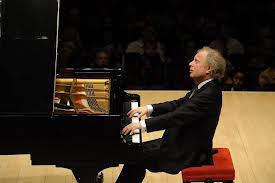
Joel Beeke wrote an interesting paper on the Puritan Richard Sibbes’ view of the day to day leading of the Holy Spirit in the lives of Christians.  It’s called “Richard Sibbes on Entertaining the Holy Spirit.”:

Richard Sibbes (1577-1635) was one of the greatest Puritans of his age. He greatly influenced the direction and content of Puritan preaching, theology, and writing in England and America. Sibbes’s theology of the Holy Spirit is especially important because of its emphasis on how the Spirit operates in the daily life of the Christian. Sibbes winsomely referred to that process as “entertaining the Spirit” in the soul. For Sibbes, that entertaining meant to nurture the friendship and hospitality of an indwelling Spirit. “There is no one in the world so great and sweet a friend who will do us so much good as the Spirit, if we give him entertainment,” Sibbes wrote. . . .

The believer is like a musical instrument, tuned and played by the Spirit. Sibbes wrote, “Let us lay ourselves open to the Spirit’s touch. When the Spirit has ruling sway in our lives he fine-tunes our souls much like a musical instrument, and then he plays our lives as a piano concerto before God.” . . .

The Spirit’s Indwelling

Sibbes went on to describe this process of tuning and the touch of the Holy Spirit: “The Holy Spirit must rule; he will have the keys delivered to him. We must submit to his government, and when he is in the heart he will subdue by little and little all high thoughts, rebellious risings, and despairing fears.” . . .

Sibbes’s conclusion was inevitable: “Where there is no conflict, there is no Spirit of Christ at all.” In this he echoed the apostle Paul’s teaching that if you mortify the deeds of the flesh by the Spirit, you are led by the Spirit (Rom. 8:13). You then, by grace, entertain the Spirit. You befriend and show hospitality to that Spirit who gives you the victory over all enemies by faith (1 John 5:4). . . .

The Spirit’s Sealing

So the second kind of sealing Sibbes wrote about was a process. It was the kind of assurance that could increase gradually throughout our lives by means of singular experiences and by daily, spiritual growth. This sealing had degrees; it could grow with spiritual maturity. Sibbes wrote: “The Spirit sealeth by degrees. As our care of pleasing the Spirit increaseth so our comfort increaseth. Our light will increase as the morning light unto the perfect day. Yielding to the Spirit in one holy motion will cause him to lead us to another, and so on forwards, until we be more deeply acquainted with the whole counsel of God concerning our salvation.” . . .

Would you be comforted and quieted in your soul? Labor to entertain the Spirit. Give room to His motions in your soul, remembering as Sibbes concluded, “The soul without the Spirit is darkness and confusion, full of self-accusing and self-tormenting thoughts. If we let the Spirit come in, [he] will scatter all and settle the soul in a sweet quiet. . . .

Grieving the Spirit

At such times we grieve the Spirit, Sibbes said in A Fountain Sealed. Sibbes cried, “What greater indignity can we offer to the Holy Spirit than to prefer base dust before his motions leading us to holiness and happiness. What greater unkindness, yea, treachery to leave directions of a friend to follow the counsel of an enemy; such as when we know God’s will, yet will consent with flesh and blood in leaving a true guide and following a pirate.” . . . 

Sibbes offered still more ways in which we grieve the Spirit. He wrote, “We commonly grieve the Spirit of God when the mind is troubled with a multitude of busyness; when the soul is like a mill where one cannot hear another; the noise is such as takes away all intercourse.” That is to say, when we fill our lives with things other than spiritual concerns, we bring grief to the blessed Spirit. Activity is not synonymous with spirituality, as popular Christian culture would have us believe. Rather, we are called to humble dependence and meditation upon the Spirit. As Sibbes said, “This grieves the Holy Spirit also when men take the office of the Spirit from him,” that is, when we will do things in our own strength and by our own light. We all too willingly, go about our Christian tasks in our own strength, never realizing that in doing so, we become our own end, and with a theft of God’s honor our activities become meaningless. . . .

Conclusion

Today, the relationship between believers and the Holy Spirit is too often like a bad marriage in which a husband takes advantage of his wife’s contributions but fails to appreciate and celebrate his relationship with her. To reverse this situation, Sibbes advised that we should make a daily effort to appreciate the Holy Spirit, and to share our thoughts and plans with Him in prayer as we gaze by faith into the face of God. We should walk in daily communication with the Spirit, through the Word, relying upon every office the Holy Spirit provides, as described in Scripture. In this way, the blessed Spirit, who speaks not of Himself, but of Christ and the Father, also reveals Himself to the believer, through display of His attributes, as true God, the third Person of the Holy Trinity. As Sibbes wrote: “The Holy Spirit being in us, after he that prepared us for a house for himself to dwell in and to take up his rest and delight in, he doth also become unto us a counselor in all our doubts, a comforter in all our distresses, a solicitor to all duty, a guide in the whole course of life, until we dwell with him forever in heaven, unto which his dwelling here in us doth tend.”

Lord, ever more grant us to entertain Thy Holy Spirit. Sanctify us by Thy Spirit. Indwell us, seal our souls, comfort us, keep us from grieving Thy Spirit. Prepare us for eternal communion with Thee.

You can read the whole thing here:

http://www.puritansermons.com/banner/beeke01.htm

You can listen to a sermon on this theme here:

http://www.sermonaudio.com/sermoninfo.asp?SID=121132125279

Posted in Uncategorized | Leave a comment

The Gospel Encapsulated


Here are 2 creative videos that share the gospel in less than 5 minutes.

gospel 4 min


http://www.youtube.com/watch?v=K48-Li7lIfA

good person?


http://www.youtube.com/watch?v=FdxvKO2Zyro

Charles Spurgeon:

I do not believe that any man can preach the gospel who does not preach the law. The law is the needle, and you cannot draw the silken thread of the gospel through a man’s heart unless you first send the needle of the law to make way for it. If men do not understand the law, they will not feel that they are sinners. And if they are not consciously sinners, they will never value the sin offering. There is no healing a man till the law has wounded him, no making him alive till the law has slain him.

See more on the Gospel at:

http://www.challies.com/sponsored/web-stuff-wednesdays-4

Posted in Uncategorized | Leave a comment

Holy Spirit Impressions

listen

Do you think the Holy Spirit gives saints “impressions” about how we should practically live our lives, and apply the Scriptures to daily situations?

I do — as long as we understand such “impressions” as bringing Illumination onto the already written Scriptures, and not new Revelation from beyond the bible.

Rom. 8:14 “For all who are being led by the Spirit of God, these are sons of God.”

John Murray, in his article, “The Guidance of the Holy Spirit” agrees with me.  He writes:

The demands of God’s Word are all-pervasive, and the revelation God has given to us of his will in the Scriptures applies to us in every situation.

It is equally necessary to remember that we must rely upon the Holy Spirit to direct and guide us in the understanding and application of God’s will as revealed in the Scripture, and we must be constantly conscious of our need of the Holy Spirit to apply the Word effectively to us in every situation.

The function of the Holy Spirit in such matters is that of illumination as to what the will of the Lord is, and of imparting to us the willingness and strength to do that will.

It needs also to be recognized that, as we are the subjects of this illumination and are responsive to it, and as the Holy Spirit is operative in us to the doing of God’s will, we shall have feelings, impressions, convictions, urges, inhibitions, impulses, burdens, resolutions. Illumination and direction by the Spirit through the Word of God will focus themselves in our consciousness in these ways.

We are not automata (robots). And we are finite. We must not think, therefore, that a strong or overwhelming feeling or impression or conviction, which we may not be able at a particular time to explain to others, or ourselves is necessarily irrational or fanatically mystical. Since we are human and finite and not always able to view all the factors or considerations in their relations to one another, the sum total of these factors and considerations bearing upon a particular situation may focus themselves in our consciousness in what we may describe as a strong feeling or impression.

In many cases such a feeling or impression is highly rational and is the only way in which our consciousness, at a particular juncture, can take in or react to a complex manifold of thoroughly proper considerations. In certain instances it may take us a long time to understand the meaning or implications of that impression

See the collected Writings of John Murray, Vol 1 (Banner of Truth, 1976), pp. 187-188.

Here’s a sermon I recently preached on this topic of The Personal Leading of the Holy Spirit:

http://www.sermonaudio.com/sermoninfo.asp?SID=121132125279

Posted in Uncategorized | 2 Comments

10 Errors to Avoid When Talking about Sanctification and the Gospel

grudem-graph1

Kevin DeYoung writes:

With lots of books and blog posts out there about law and gospel, about grace and effort, about the good news of this and the bad news of that, it’s clear that Christians are still wrestling with the doctrine of progressive sanctification. Can Christians do anything truly good? Can we please God? Should we try to? Is there a place for striving in the Christian life? Can God be disappointed with the Christian? Does the gospel make any demands? These are good questions that require a good deal of nuance and precision to answer well.

Thankfully, we don’t have to reinvent the wheel. The Reformed confessions and catechisms of the 16th and 17th centuries provide answers for all these questions. . . We can learn a lot from what these documents have to teach us from the Bible.

Sometimes the truth can be seen more clearly when we state its negation. So rather than stating what we should believe about sanctification, I’d like to explain what we should not believe or should not say. . . .

Error #1: The good we do can in some small way make us right with God. This is a denial of the gospel. The good we do is of no use to us in our justification because “even the very best we do in this life is imperfect and stained with sin” (HC Q/A 62). . . .

Error #2: We must be good Christians so that God will keep loving us. To the contrary, the good news of justification by faith alone means that we can now “do a thing out of love for God” instead of “only out of love for [ourselves] and fear of being condemned” (BC Art. 24). . . .

Error #3: If sanctification is a work of divine grace in our lives, then it must not involve our effort. . . .  Our ability to do good works “is not at all” in ourselves, but we still “ought to be diligent in stirring up the grace of God that is in [us]” (WCF 16.3).

Error #4: Warning people of judgment is law and has no part to play in preaching the gospel. Actually, . . . The kingdom of heaven is closed by proclaiming “to unbelievers and hypocrites that, as long as they do not repent, the anger of God and eternal condemnation rest on them. . . . 

Error #5: There is only one reason Christians should pursue sanctification and that’s because of our justification. The Heidelberg Catechism lists several reasons—motivations even—for doing good. . . .

Error #6: Since we cannot obey God’s commandments perfectly, we should not insist on obedience from ourselves or from others. While it is true that “in this life even the holiest have only a small beginning of this obedience,” that’s not the whole story. “Nevertheless, with all seriousness of purpose, they do begin to live according to all, not only some, of God’s commandments” (HC Q/A 114). . . . 

Error #7: The Ten Commandments should be preached in order to remind us of our sin, but not so that believers may be stirred up to try to obey the commandments. The Heidelberg Catechism acknowledges that “no one in this life can obey the Ten Commandments perfectly,” but it still insists that “God wants them preached pointedly.” . . . 

Error #8: Being fully justified as Christians, we should never fear displeasing God or offending him. . . .  Even believers can commit “monstrous sins” that “greatly offend God.” When we sin in such egregious ways, we “sometimes lose the awareness of grace for a time” until we repent and God’s fatherly face shines upon us again (5.5). . . . 

Error #9: The only proper ground for assurance is in the promises of God found in the gospel. Assurance is not to be sought from private relation but from three sources: from faith in the promises of God, from the testimony of the Holy Spirit testifying to our spirits that we are children of God, and from “a serious and holy pursuit of a clear conscience and of good works” (CD 5.10). Assurance is not inimical to the pursuit of holiness, but intimately bound up with it. . . . 

Error #10: Threats and exhortations belong to the terrors of the law and are not to be used as a motivation unto holiness. This is not the view of the Canons of Dort: “And, just as it has pleased God to begin this work of grace in us by the proclamation of the gospel, so he preserves, continues, and completes his work by the hearing and reading of the gospel, by meditation on it, by its exhortations, threats, and promises, . . . 

Clearly, different sermons, different passages, and different problems call for different truths to be accented. One is not guilty of these errors simply by not saying everything that can be said. And yet, in the course of faithful preaching and teaching all the positive truths found in a robust, thoughtful doctrine of sanctification should be publicly declared. . . . 

You can read Kevin’s entire blog here:

http://thegospelcoalition.org/blogs/kevindeyoung/2013/11/05/10-errors-to-avoid-when-talking-about-sanctification-and-the-gospel/?comments#comments#comment-40014

*Sanctification chart from Wayne Grudem

Posted in Uncategorized | Leave a comment